"In PTV OptiFlow, we can define delivery time windows and specify a preference for delivery during the first half of that window. That is one of the reasons our service levels have improved so significantly."
Success Story
From complexity to control: Distrilog transforms transport planning
Facing growing complexity, rising costs, and driver constraints, Distrilog redefined its planning approach with PTV OptiFlow. The result: greater efficiency, improved service levels, and consistently higher operational profitability across its logistics network.
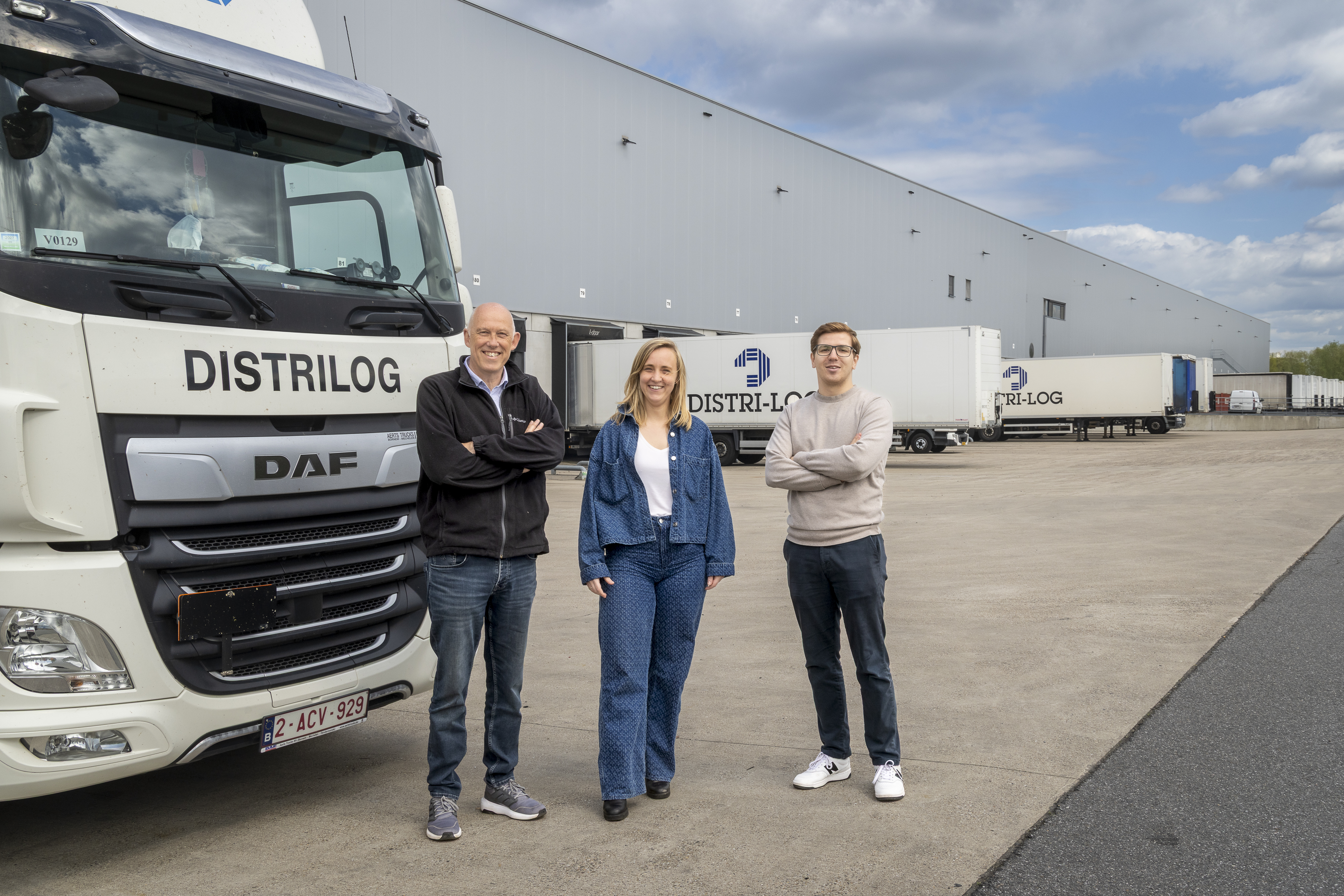

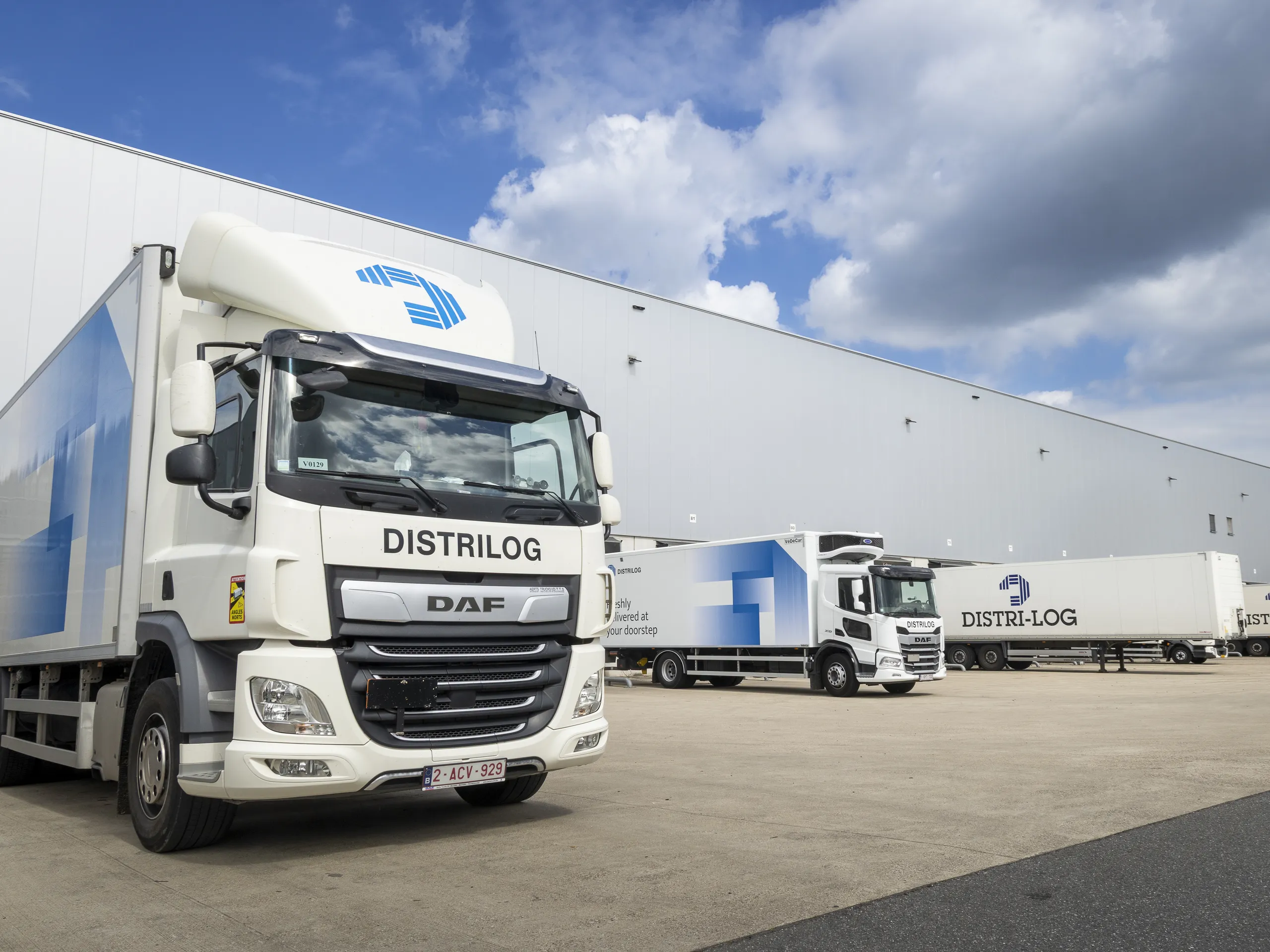
Distrilog is one of Belgium’s most versatile logistics service providers, operating a fleet of 350 vehicles. Its activities range from last-mile distribution to full truck loads, and from frozen transport to container logistics. Since switching to the route planning system PTV OptiFlow, the family-owned company headquartered in Willebroek has significantly improved its business performance.
"We discovered that our vans were actually costing us money instead of generating profit."
Driver Preferences Add Complexity
In Flanders, truck driving is considered a shortage occupation, making it increasingly difficult to attract and retain qualified drivers. As a result, Distrilog’s planners make every effort to accommodate driver preferences.
"There are plenty of preferences," explains Gert Van den Bossche, who leads Distrilog’s Continuous Improvement Team. "One driver only wants to operate in a specific region, another insists on driving a particular vehicle. We even have drivers who only want to work five hours per day."
Van den Bossche is joined by Transport Manager Julie Dierckx and Jordy van Praet. According to Dierckx, driver preferences are becoming increasingly important.
"We realize we need to take driver preferences into account even more. What makes this particularly challenging is that Belgium has two official languages, and customers prefer to be served in their own language. A driver who does not speak French cannot realistically be assigned deliveries in Wallonia."
The Human Touch
Driver preferences are just one reason why transport planning is becoming increasingly complex. Other factors include the electrification of road transport and the growing number of time-specific deliveries.
"One customer wants a delivery between 9 and 10 a.m., while another customer just two streets away only wants delivery after 2 p.m.," says Van den Bossche.
With Distrilog’s previous planning solution, PTV Route Optimiser ST, planners would create an initial route plan and then manually adjust it to accommodate customer and driver preferences.
"Each planner added their own personal touch based on their knowledge and experience," explains Van Praet. "If they anticipated a problem, they would manually modify the plan to avoid it."
Cost optimization was rarely the primary objective.
"There was little focus on reducing hours or kilometers," admits Van den Bossche. "The main goal was simply to ensure that all orders could be delivered with a feasible route plan."
Improving Operational Profitability
That changed when Distrilog CEO Philip Salaerts challenged the organization to improve operational profitability. The Continuous Improvement Team began evaluating opportunities and quickly focused on transport planning.
"We reviewed several route planning solutions, including PTV OptiFlow, PTV’s newest platform. Using our historical data, PTV developed a business case and identified the potential savings."
Encouraged by the positive business case, Distrilog decided to test the solution. For nearly six weeks, the company operated both the old and new systems side by side at its Olen depot.
"It is a mid-sized depot within our distribution network: large enough to measure impact, yet small enough to intervene if needed," says Van Praet.
During the pilot period, the system was fine-tuned using feedback from planners, management, and drivers. After six weeks, Distrilog fully transitioned Olen to PTV OptiFlow and never looked back.
Greater Cost Transparency
Results were visible almost immediately. PTV OptiFlow generated route plans with significantly fewer kilometers and driving hours. In some cases, the same transport volume could be handled using fewer vehicles.
"That is the holy grail in transport," says Van Praet.
In addition, the new plans proved far more realistic.
"The predicted arrival times now align much more closely with the actual arrival times," adds Dierckx.
Another major advantage is the increased visibility into cost structures.
"We operate a fleet of 350 vehicles. Slightly less than half are used within our distribution network, including city trailers, rigid trucks, and vans. We entered all vehicle costs into the system, along with subcontractor contracts. It quickly became clear that subcontractors could be deployed more cost-effectively—or, in some cases, were no longer required at all."
Rethinking Vans
PTV OptiFlow also challenged another long-standing assumption: that vans should always be utilized to their maximum capacity.
"Management was convinced that our vans needed to be fully loaded at all times," says Van den Bossche. "But every time we analyzed the results, they turned out to cost more than they generated. It simply makes no sense to send a van somewhere if a rigid truck is already passing nearby."
Today, only four vans remain in operation: two serving Brussels and two serving Antwerp.
The pilot in Olen began in April 2025. After approximately six weeks, Distrilog permanently switched to PTV OptiFlow. Another six weeks later, the remainder of the distribution planning operation was migrated.
"To this day, we continue fine-tuning the system," says Van Praet. "We adjust parameters based on feedback from planners, drivers, customers, and managers. Initially this happened daily; now it happens once or twice per week."

Higher Service Levels
Since autumn 2025, additional planning groups have transitioned to PTV OptiFlow. Frozen transport planning was migrated first, followed by chilled transport planning earlier this year.
Each migration followed the same process: operating both systems in parallel, learning from the results, fine-tuning the setup, and then making a full transition.
"When we migrated chilled transport planning, management was concerned about the impact on service levels," says Van den Bossche. "These deliveries replenish supermarket shelves, so reliability is critical. Yet after only a few months, service levels are several percentage points higher than ever before."
According to Van Praet, achieving these improvements would not have been possible with the previous planning system.
The Results

Reduced Routes, Lower Costs

More Accurate Delivery Times

Higher Service Level Performance
One Integrated Plan
Because multiple planning groups now use PTV OptiFlow, Distrilog is preparing to create a single integrated plan for approximately 150 vehicles.
Previously, each planning group created separate route plans.
"It was possible for two half-full trucks to be sent to the same region," says Van den Bossche. "Or for one planner to have a driver scheduled for only five hours while another planner needed three additional hours of capacity. Soon we will be able to balance these resources much more effectively."
The benefits are expected to grow further during phase two, when full truck load (FTL) planning is integrated into the platform.
"We believe we can significantly reduce empty kilometers across our fleet of 175 tractor-trailer combinations," explains Dierckx. "Because we can better predict when a trailer becomes available, we can also better plan the next shipment a driver can collect."
Van den Bossche adds:
"Our current rule of thumb is that shipments of more than six pallets are handled as FTL shipments. PTV OptiFlow will undoubtedly show us that this is not always the most optimal choice."
A New Way of Working
For planners, the transition required a change in mindset.
The old planning system generated a proposal that planners would manually modify. The new system eliminates the need for manual adjustments, provided the parameters are configured correctly.
"The planners’ jobs have actually become easier," says Dierckx. "They quickly recognized the benefits of the new approach and were convinced quite rapidly."
Even drivers adapted more easily than expected.
"We anticipated more resistance from drivers, but they actually preferred the new routes and planning approach. The only challenge is that we cannot always accommodate every regional preference."
Van den Bossche believes the organization is still developing new routines.
"Our planners need to use driver feedback to validate and adjust planning parameters when necessary. They can also make better use of scenario planning and comparison capabilities. By adjusting parameters, they can often unlock additional efficiency gains and cost savings."
Stable High Performance
The final question is whether operational profitability has improved since implementing PTV OptiFlow.
"It absolutely has," says Van den Bossche.


"The most noticeable improvement is consistency. Previously, we sometimes saw major month-to-month fluctuations, for example in the relationship between planned hours and transported volume. Those fluctuations have almost completely disappeared. Our performance now remains consistently at a high level."