Search for content
Complex logistics networks

Route optimization for complex logistics networks

How planners and logistics leaders plan many depots, many vehicle types, and many rules as one network. 

Most days, the plan gets built, and it is usually a workable one. It is rarely the lowest cost plan, because nobody can compare every way of splitting orders across several depots, vehicle types, and delivery windows by hand. Every extra depot, rule, or vehicle type multiplies the options. 

The right route optimization software for complex logistics networks closes that gap. This guide explains what makes a network complex, how optimization handles it, and what to look for when you choose software. 

Book a demo

What counts as a complex logistics network? 

Size is only part of it. A network with ten vehicles can be complex, and one with a thousand identical vehicles leaving a single depot can be simple. Complexity grows with the number of things that have to be decided together. It usually shows up in one or more of these ways: 

  • Multiple depots or hubs. Several warehouses, cross docks, or stores can serve the same customers, and someone has to decide which one should. Searchers call this the multi depot vehicle routing problem. 
  • Tiered networks. Freight moves from a central hub to regional depots and then out to local delivery. A decision at one tier changes what is possible at the next. 
  • Mixed fleets. Vans, rigid trucks, trailers, and subcontractors sit side by side, each with a different capacity and cost per kilometer. 
  • Time windows and service levels. Customers expect delivery between 8 and 10, or inside a promised slot. Every window narrows the choices. 
  • Pickups and deliveries on the same route. Collections, returns, and backhauls share vehicles with outbound deliveries. 
  • Rules that limit the plan. Driver hours and breaks, vehicle access restrictions, load compatibility, driver skills, and temperature control all shape what is feasible. 
  • Many clients on one network. Third party logistics providers run several customers, each with its own promises, on shared assets. 
  • Daily change. New orders, cancellations, traffic, and absent drivers mean the plan from last night is out of date by mid morning. 

If three or more of these sound like your operation, a basic route planner is likely to leave money on the table. 

Also related: Transportation planning software for freight and delivery networks 

Why complex networks outgrow spreadsheets and basic route planners 

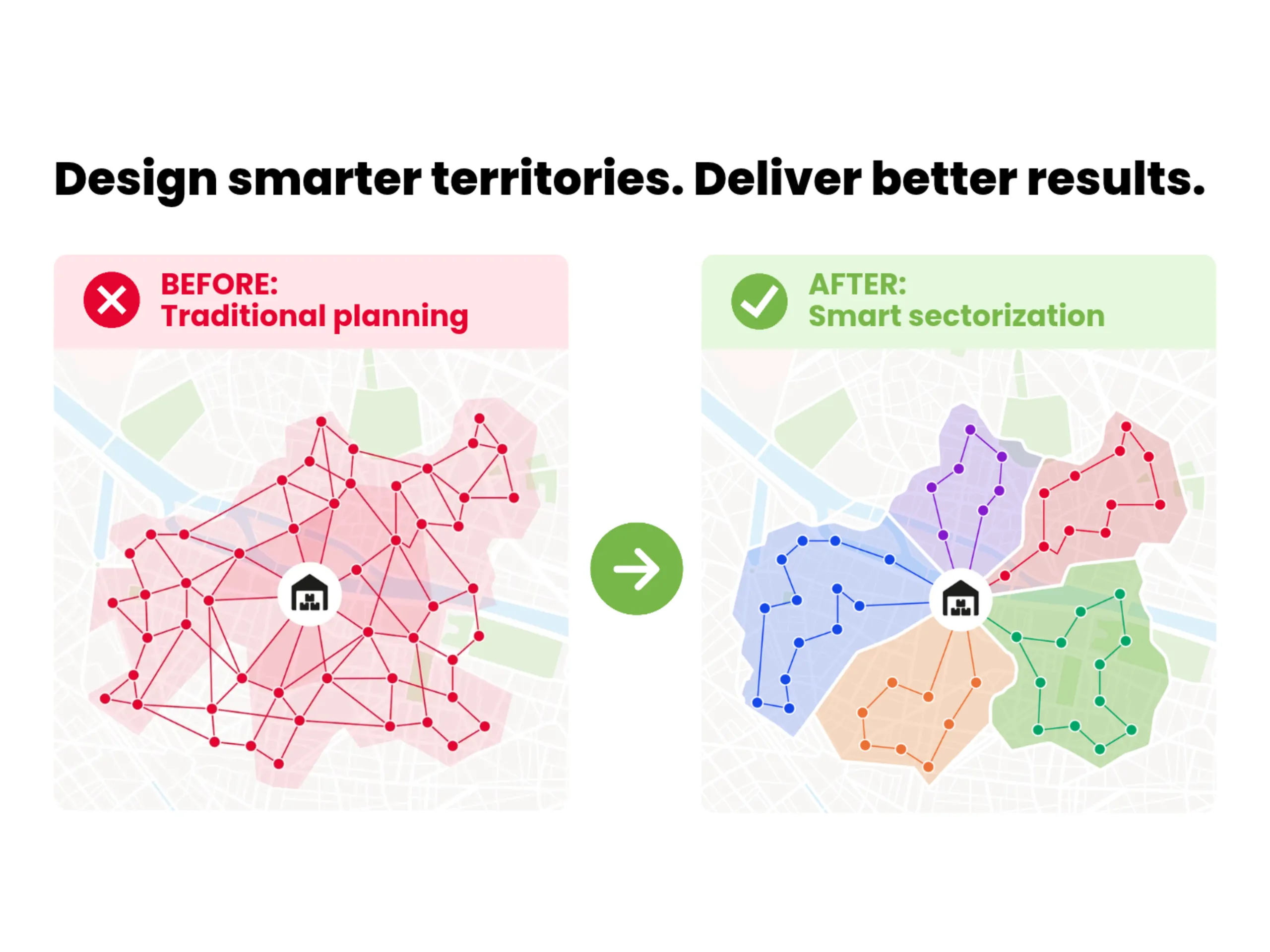
A basic route planner treats each vehicle as its own puzzle. It orders the stops well enough. What it cannot see is how a depot choice, a vehicle choice, and a time window affect each other across the whole network. Those interactions are where the cost hides: extra kilometers, half empty vehicles, and customers served from the wrong depot. 

Cost pressure makes that hidden cost harder to ignore. The American Transportation Research Institute reports that the average cost to operate a truck in the US reached $2.336 per mile in 2025, up 3.4 percent on the year and the highest per mile cost in the history of its report (ATRI, 2026 Analysis of the Operational Costs of Trucking, July 15, 2026). At that level, a few avoidable kilometers on every route add up quickly. 

Three signs your network has outgrown manual planning: 

  • Your planners spend the morning building the plan and the afternoon repairing it. 
  • The same customer is served from different depots on different days, with no clear reason. 
  • Nobody can explain why one depot is busy while another has spare capacity. 

Turn complex network questions into clear plans

Tell us about your depots, fleet, and rules. We will show you what network wide optimization looks like on your own data.  

Book a demo

How route optimization works across a complex network 

The method is the same whether you run four depots or forty. What changes is how many rules the software has to hold at once. 

  1. Describe the network 
    Orders, vehicles, depots, drivers, and rules go in. The more accurately the inputs match reality, the more useful the plan.
  2. Define what cost means for you 
    Some networks win on distance. Others win on driver hours, vehicle use, or capacity. You set the cost drivers, and the optimizer plans against them.
  3. Assign orders to depots and vehicles together 
    Depot choice, vehicle choice, and stop order are solved as one problem. This is what separates network optimization from routing each vehicle on its own.
  4. Plan with realistic travel times
    A route that is fast at 3am is slow at 8am. Time dependent traffic models built on historic traffic patterns keep the plan feasible on the road, not only on paper.
  5. Review, adjust, and re-plan 
    Planners review the result and handle the exceptions. When orders or capacity change, the plan is run again from the new starting point.

Three planning levels: strategic, tactical, and operational 

Complex networks need answers at three levels, and a decision at one level changes the next. 

  • Strategic. How many depots do we need, where should they be, and what fleet should serve them? These decisions play out over months and years. 
  • Tactical. Which depot covers which area, and how much capacity do we need next quarter? These play out over weeks and months. 
  • Operational. Which vehicle takes which stops today? These play out in hours. 
What factors should you consider when choosing route optimization software for complex networks? 

Most vendor pages say they handle multiple depots and many constraints. Few explain how. These are the questions that separate a tool that copes from one that fits. 

  • How does it decide which depot serves which customer? 
    Ask to see the logic and the result, not only the claim. 
  • How deep is the constraint coverage? 
    Time windows, driver hours, vehicle restrictions, load compatibility, and skills should all be covered, and a rule that is only a preference should be treated as one. 
  • Can you define cost your way? 
    Distance only is rarely how your business measures cost. 
  • Does it use realistic travel times? 
    Static averages produce plans that fail at 8am. 
  • Does it cover strategic questions as well as daily routes?
     Depot and fleet decisions need scenario comparison. 
  • What are the stated limits? 
    Ask for the number of daily routes, stops, and depots it handles, in writing. 
  • How does it connect to your systems? 
    Look for documented APIs and named integrations with your TMS, ERP, and WMS. 
  • Can a planner see and adjust the result? 
    Optimization should support your planners, and they should be able to approve every decision. 

How PTV Logistics helps with complex network planning 

Complex networks need answers at every level, from where depots should sit to which vehicle takes which stops today. PTV Logistics brings strategic, tactical, and operational planning together in one optimization solution. You can work with it as an application, as a conversational assistant, or through APIs, depending on how your teams plan.

PTV OptiFlow: plan routes across all your depots in one run

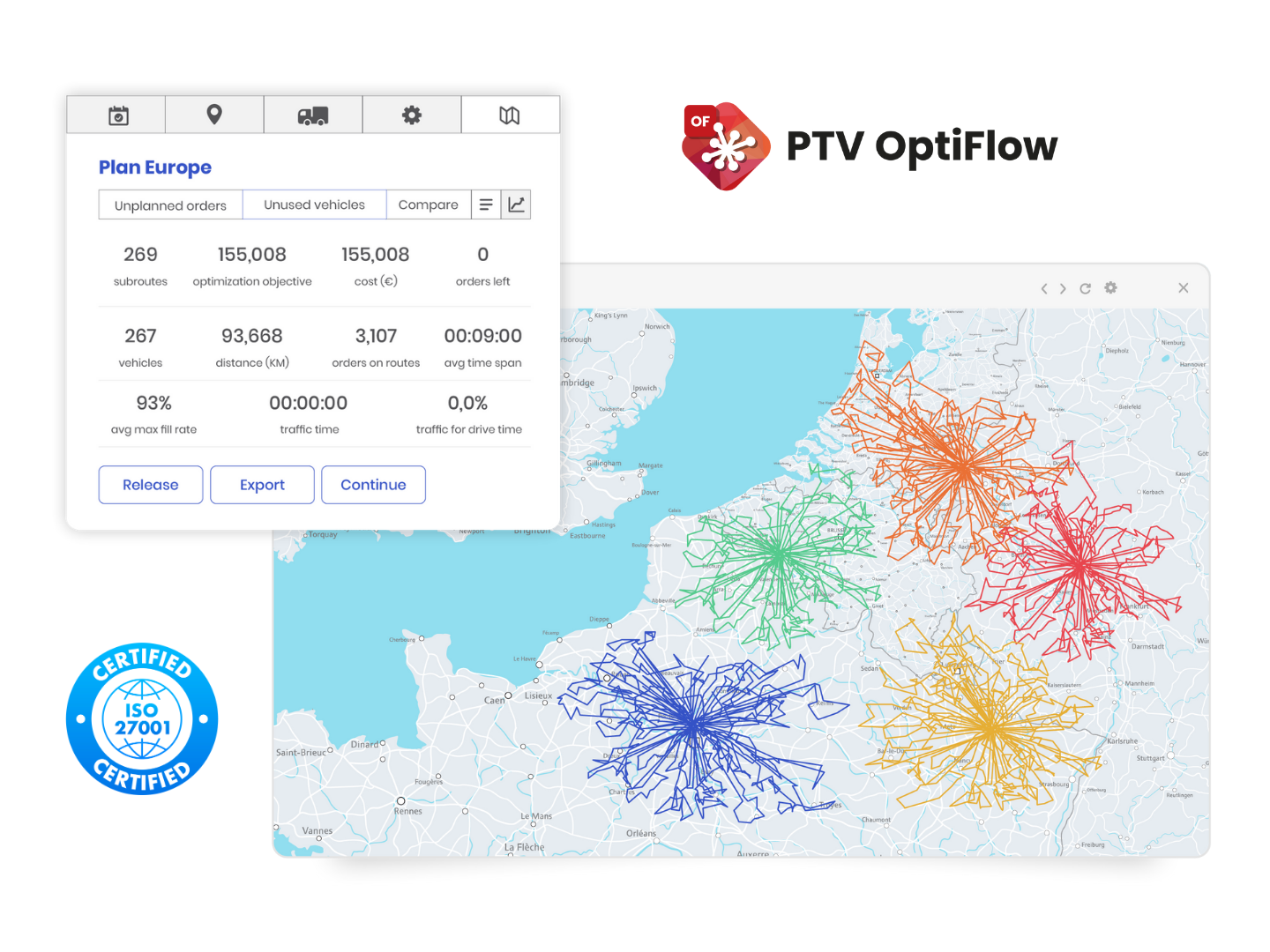
With PTV OptiFlow, the planner loads the orders and available vehicles, chooses the cost drivers that matter, whether time, distance, capacity, or workload, and runs the optimization. The plan reflects depots, vehicle types, and the rules that limit what is feasible, and time dependent traffic models keep the routes realistic on the road. PTV OptiFlow is available as a SaaS application, through PTV Mira, or as an API engine through PTV Developer. 

Explore PTV OptiFlow 

PTV Mira: ask the network a question

PTV Mira is a logistics intelligence agent you can talk to. She turns planning and analysis questions into real optimizations, compares scenario alternatives, and explains the results, so a question such as what happens to cost and service if a depot closes gets an answer in minutes instead of hours or days. PTV Mira supports your decisions, and you approve every action. She is built on more than 40 years of PTV Logistics routing and optimization expertise. 

Explore PTV Mira 

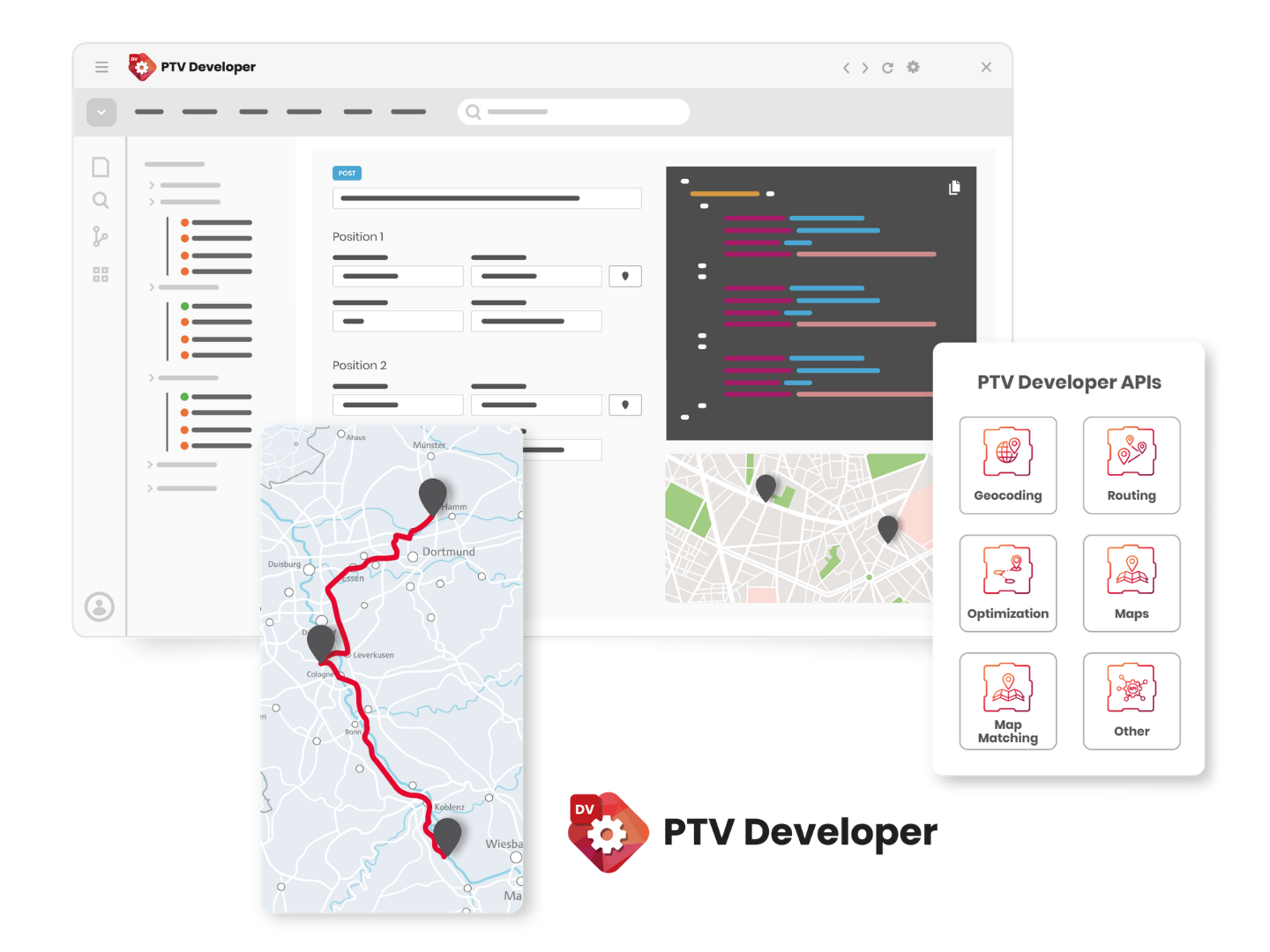
PTV Developer: build it into the systems you already run

PTV Developer is a modular API platform with 17 individual APIs across six areas: route optimization, truck routing, geocoding, maps, map matching, and supporting services. You can mix and match them, so optimization can sit inside the TMS, ERP, or WMS you already run. It scales from 10 to more than 10,000 daily routes and is SAP TM ready. 

Explore PTV Developer 

Proof from complex networks

See your own network planned as one

Share your depots, fleet, and delivery rules, and we will show you what a single plan looks like on your data. 

Talk to a logistics expert

FAQs about route optimization for complex logistics networks

Toggle accordion item
What is route optimization software for complex logistics networks?

Route optimization software for complex logistics networks plans routes, stops, and vehicles across many depots, vehicle types, customers, and rules at the same time, so the whole network runs at the lowest total cost instead of each route being planned on its own. In plain words, it decides which depot serves which customer, which vehicle takes which stops, and in what order, while respecting every rule you set. 

Toggle accordion item
What is the vehicle routing problem (VRP)?

The vehicle routing problem is the challenge of finding the best set of routes for a fleet of vehicles serving a set of customers. Route optimization software solves it automatically. Real networks add rules such as capacities, time windows, and driver hours, which is why they are called complex or rich routing problems. 

Read more about it here: Leveraging AI for Route Optimization: Pros, Limits, and Risks 

Toggle accordion item
What is a multi depot vehicle routing problem?

A multi depot vehicle routing problem is a routing problem where vehicles start from more than one depot and the software must decide which depot serves which customer as well as the route order. Treating depot choice as part of the optimization usually works better than assigning customers to depots first and routing afterwards. 

Toggle accordion item
Should I switch from single depot to multi depot logistics?

Consider it when you operate from two or more depots but still plan as if you had one. Common signs are planners manually reassigning customers between depots to fix daily capacity, spreadsheets sitting alongside your TMS, cost per stop rising despite healthy volume, time windows that differ sharply by region, or new depots and depot closures on the horizon. Model the options with your real orders before you decide, because the right answer depends on where your demand is and how it changes through the week. 

Read more about this in detail here: Single depot vs multi depot planning: Challenges, tradeoffs and solutions 

Toggle accordion item
Which depots should serve which delivery areas?

The depots that give the lowest total cost across the whole network, not simply the closest ones. The answer depends on distance, travel time at the time of day, depot capacity, vehicle availability, and service windows. An optimizer weighs those together, so a customer closest to one depot may still be better served from another. 

Toggle accordion item
How do large enterprise fleets optimize multi depot routing?

They plan the depots, vehicles, and stops as one problem and let software compare the options. In practice that means loading all orders and vehicles together, defining what cost means for the business, and letting the optimizer assign customers to depots and sequence the routes in one run. Planners then review the result and handle exceptions. 

Toggle accordion item
How do you optimize delivery schedules with tight time windows?

Treat each time window as a constraint the plan must respect, then optimize cost around it. The software checks whether a vehicle can reach each stop inside its window using realistic travel times, so a route that looks fast at 3am is not counted as feasible in 8am traffic. Narrow windows reduce your options, which is why they are worth planning across the whole network and not one route at a time. PTV OptiFlow works this way: it weighs distance, time windows, and available capacity together and uses time dependent traffic models, so the plan holds up on the road.  

Toggle accordion item
Which AI logistics assistant can simulate network scenarios through natural language questions?

PTV Mira is a logistics intelligence agent that turns planning and analysis questions into real optimizations, compares scenario alternatives, and explains the results. You can ask questions such as what happens to cost and service if a depot closes. She supports decisions and does not make them, so users approve every action.  

Your next recommended reads