

- Workload-Balanced Sector Design: Automatically balance delivery zones using realistic stop service times, driver shift restrictions, and vehicle capacity profiles rather than simple geographic area size.
- Service Consistency & Driver Familiarity: Maintain core sector consistency so drivers retain critical site-access knowledge and customer familiarity, while allowing those conducting deliveries further out to adapt more flexibly to volume shifts.
- Cross-Territory Friction Resolution: Eliminate overlapping routes between adjacent depots by calculating joint-network boundaries.
What transportation planning actually means
Transportation planning is the strategic and tactical process of determining a logistics network's structure - depot locations, fleet sizing, resource allocation, and delivery territories - across time horizons ranging from weeks to years, before a single vehicle is dispatched.
It is the structural layer that sits above day-to-day dispatch. Route optimization calculates daily stop sequences and paths for vehicles inside a network that already exists; transportation planning decides what that network looks like in the first place - how many depots, where they sit, how big the fleet should be, and how resources are allocated across it. Get the planning layer wrong, and no amount of daily route optimization can fully compensate for it.
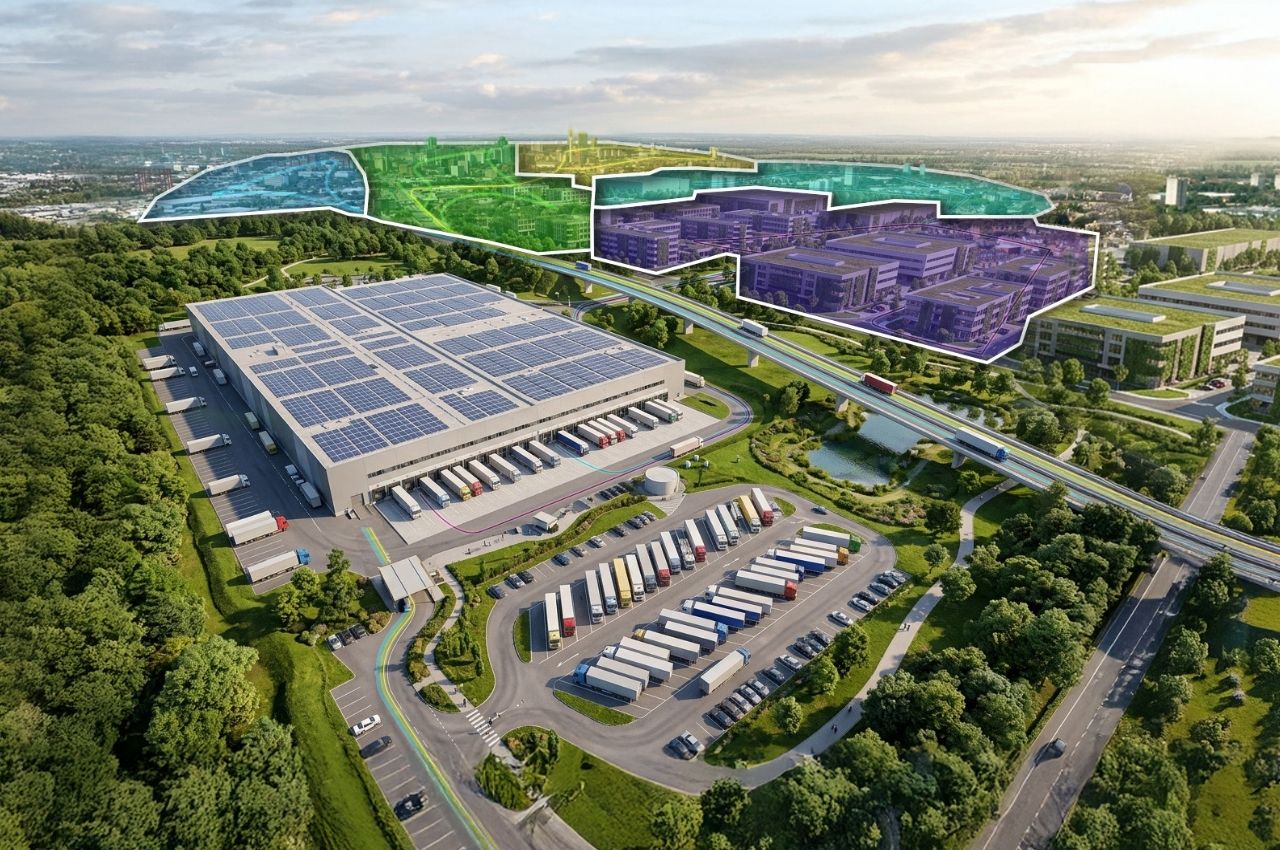
Smart data-driven sectorization replaces fixed boundaries with algorithmic modeling to create balanced, coherent delivery zones based on actual workloads, road networks, and stop density. When evaluating territory planning capabilities for your distribution network, look for solutions that deliver:

Why network decisions can't be made on instinct
Network design should be tested, not assumed. It shouldn't be driven by intuition, a hunch, or even past experience. A useful example comes from the world of retail: according to Supply Chain Management Review, PepsiCo was able to reduce truck stock-outs by 4% using an AI-driven sales intelligence platform. Logistics decisions went from being the sole remit of human planners to being informed by data.
In large-scale distribution operations, the greatest operational costs are locked in long before orders are processed. Testing your plans needs to take place before you commit capital, time, and other resources. The number and location of regional depots, the footprint of delivery territories, and the total composition of the fleet set the structural baseline for your entire cost structure. It should never be left to chance.
When enterprise logistics networks rely on unexamined, legacy network designs, structural friction inevitably follows. Depot locations end up being based on little more than simple radius maps or historical volume assumptions, creating permanent mileage overhead. Capital is misallocated, with some fleets oversized and others depleted. And legacy delivery zones drawn years ago fail to reflect shifting customer stop density. It all adds up to unmodeled disruption — chaos that is difficult to predict and even harder to prevent.
By contrast, transportation planning across logistics fleets turns network structure into a testable hypothesis. By evaluating physical constraints, real road networks, driver work rules, and accurate distance-time matrices, supply chain executives can evaluate network shifts long before committing capital.
Planning has time horizons
A resilient logistics strategy requires continuous alignment across three distinct horizons: strategic, tactical, and operational. Software that only addresses day-to-day stop sequencing leaves leaders without the tools to solve structural supply chain challenges.
The strategic horizon: network design & fleet sizing
Operating across months or years, strategic planning defines the physical parameters of the logistics network. Supply chain leaders evaluate facility counts, optimal geographic placement, long-term fleet sizing, and transition models for fleet electrification.
The tactical horizon: resource allocation & capacity balancing
Working weeks to months in advance, tactical planning bridges long-term network strategy with near-term demand forecasting. It balances driver labor, vehicle assignments, shift schedules, and depot throughput limits to prevent regional capacity bottlenecks.
The operational horizon: daily dynamic execution
Acting just hours or minutes before dispatch, operational execution utilizes real-time order streams, precise time windows, and live traffic. While downstream from strategic network design, operational execution depends entirely on the efficiency established by the strategic and tactical horizons.

Network design & simulation
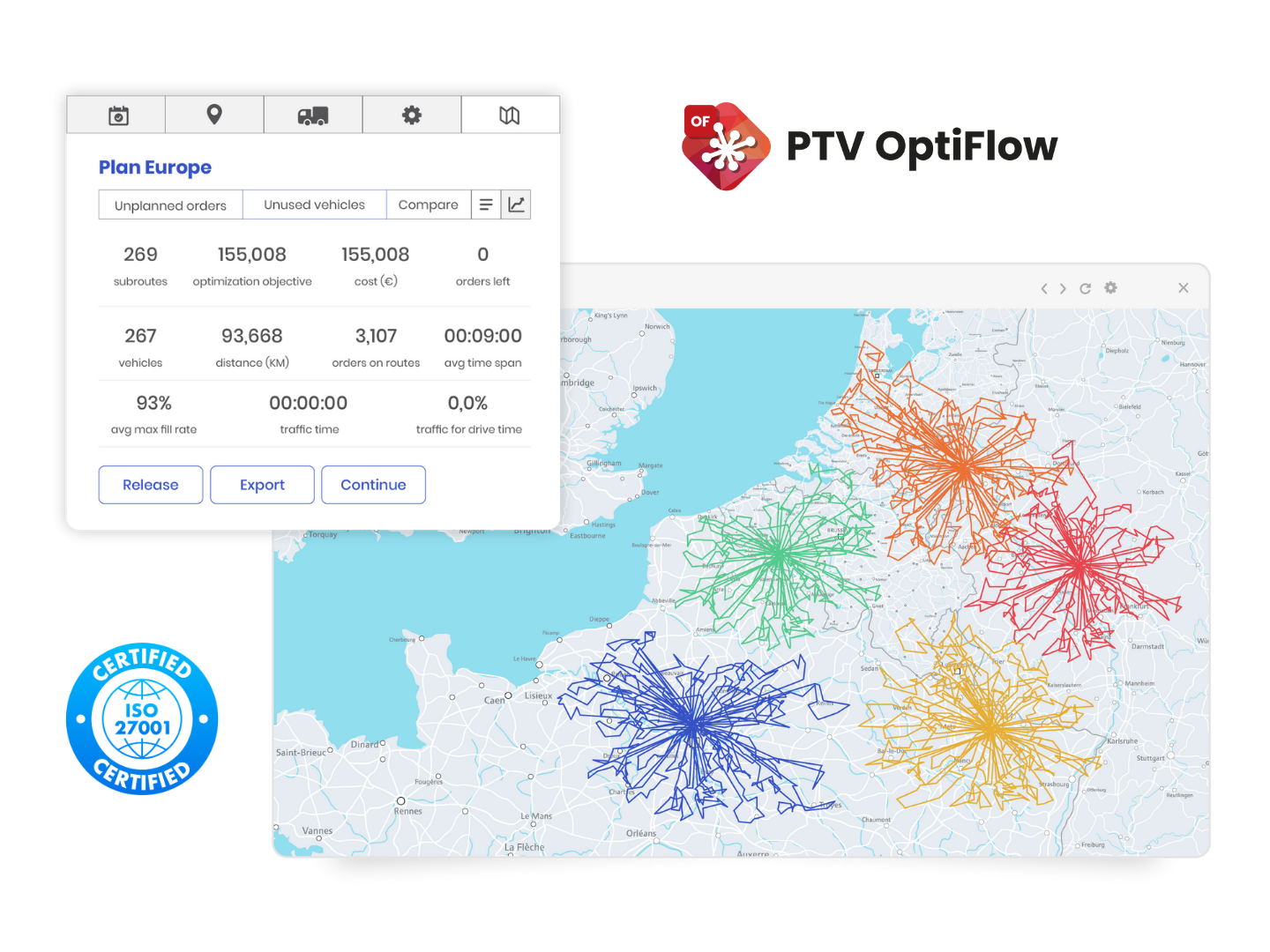
At the core of strategic transportation planning for logistics networks is the capability to simulate complex network alterations using actual operational realities rather than simple approximations.
Powered by PTV OptiFlow, enterprise logistics operations can model multi-depot scenarios with granular accuracy:
- Depot Location: Determine the optimal siting for new distribution centers, cross-docks, or hub consolidations based on actual historical and projected order volumes.
- Fleet Sizing & Mix Optimization: Calculate the optimal asset combination — balancing heavy goods vehicles (HGVs), light commercial vehicles (LCVs), specialized temperature-controlled units, and electric vehicles (EVs) — to fulfill network demand at minimal cost.
- Realistic Routing Simulations: Evaluate network alternatives using genuine commercial road restrictions, toll structures, driver work directives, and real-world travel speeds rather than static distance models.
- Depot Cost & Throughput Constraints: Incorporate fixed and variable facility costs, cross-dock loading bay capacities, and throughput limits into every scenario to ensure financial feasibility.
Resource allocation & capacity planning
Resource allocation is a planning problem, not merely a scheduling one. It relies on being able to effectively match drivers, vehicles, and shifts to real demand patterns across a whole network rather than depot by depot. This is what keeps a network efficient as it grows or as demand shifts seasonally.
Empty running remains one of the trucking industry's most persistent cost drains. According to the American Transportation Research Institute (ATRI) — a non-profit trucking research organization — empty miles rose to an average of 16.7% industry-wide in ATRI's 2025 operational cost benchmarking report. Demand, drivers, and distribution centers are disconnected. There is no unified capacity layer across the network that can ensure enterprise resources are allocated to match shifting demand across the entire network. This is what modern logistics network planning tools can deliver:
- Multi-Depot Capacity Balancing: Dynamically allocate order volumes and fulfillment responsibilities across neighboring facilities to absorb regional volume spikes and avoid local labor overtime.
- Labor Optimization: Match driver shift patterns, legal rest break requirements, and skill qualifications against anticipated delivery workloads weeks in advance.
- Peak Capacity Modeling: Simulate peak-season conditions to determine temporary vehicle leasing requirements and sub-contractor thresholds before market rates escalate.
- Network Resilience & Contingency: Test network stability against operational disruptions — such as facility maintenance closures, regional road blockages, or labor shortages — to maintain continuous SLA compliance.
Territory planning & smart sectorization
Once a network's depots and territories are designed, smart sectorization is what keeps delivery zones data-driven and coherent as stop density and geography shift, rather than leaving them as a static map drawn once and never revisited.
Your network is dynamic, and your plan should be too. Territories and delivery zones should be recalculated as your network evolves — balancing cost, service, and driver stability using current stop locations, travel times, and real-world constraints, not the historical boundaries planners inherited.
Smart data-driven sectorization replaces fixed boundaries with algorithmic modeling to create balanced, coherent delivery zones based on actual workloads, road networks, and stop density. When evaluating territory planning capabilities for your distribution network, look for solutions that deliver:
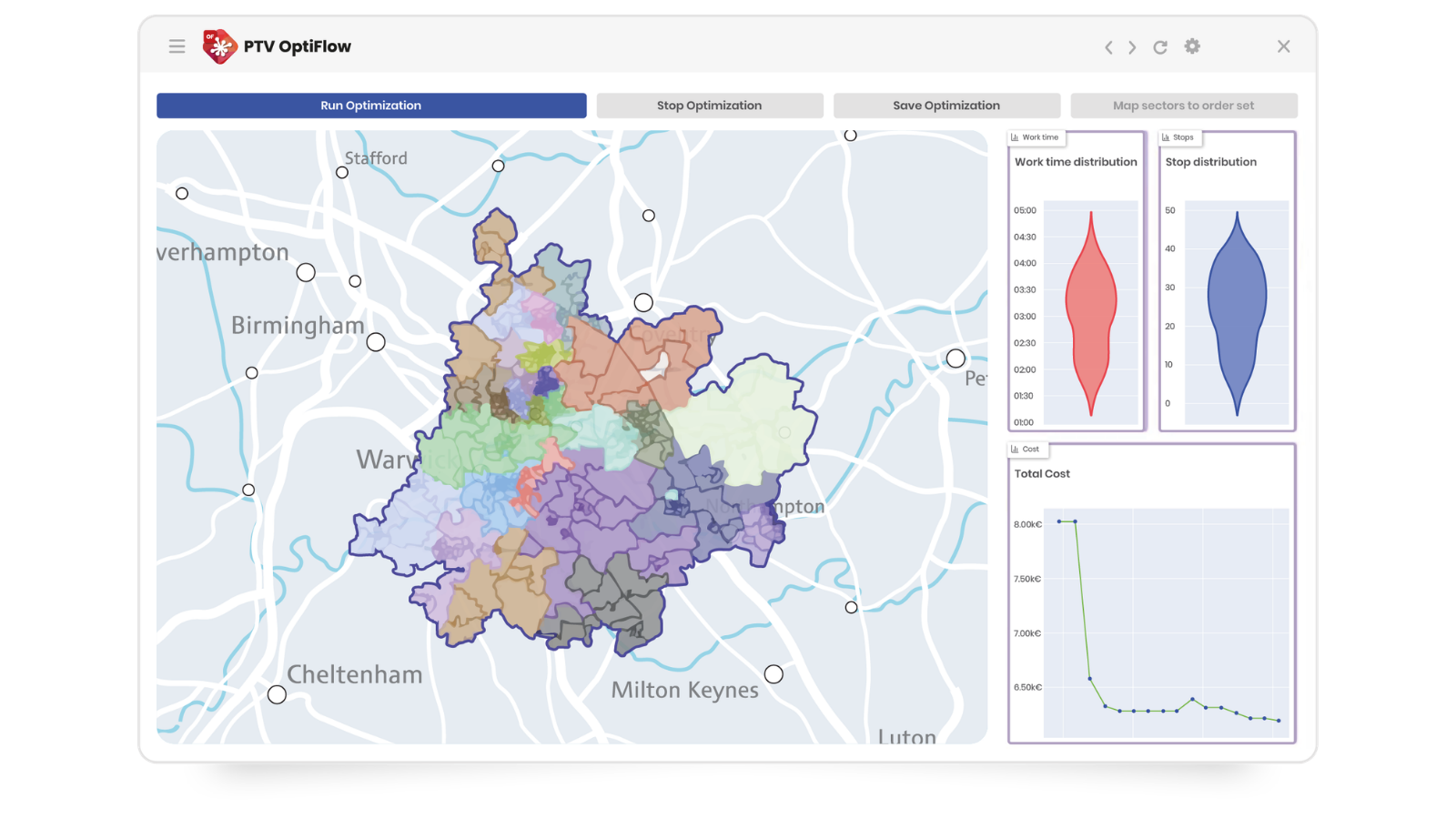

- Workload-Balanced Sector Design: Automatically balance delivery zones using realistic stop service times, driver shift restrictions, and vehicle capacity profiles rather than simple geographic area size.
- Service Consistency & Driver Familiarity: Maintain core sector consistency so drivers retain critical site-access knowledge and customer familiarity, while allowing those conducting deliveries further out to adapt more flexibly to volume shifts.
- Cross-Territory Friction Resolution: Eliminate overlapping routes between adjacent depots by calculating joint-network boundaries.


Ask the network a question
Evaluating "what-if" network decisions typically requires dedicated data science teams, specialized Geographic Information System (GIS) consultants, or weeks spent working over manual models. By contrast, PTV Mira introduces a conversational AI interaction layer built specifically for logistics decision-makers, allowing executives and network planners to explore strategic questions in plain language, such as:
- "What if we consolidate our two regional distribution hubs into a single central facility?"
- "How will our total fleet operating cost and carbon footprint change if we transition 30% of our urban delivery vehicles to electric trucks?"
- "Where should we position a new cross-dock facility to absorb a 25% increase in e-commerce stop density across our network?"
PTV Mira translates these queries into various optimization scenarios, executing algorithmic simulations and delivering clear, side-by-side comparative analyses that account for financial impact, service levels, and sustainability metrics. Advantages like these help explain why AI is becoming an increasingly important part of transportation planning for logistics fleets — management consultancy Oliver Wyman notes that supply chains using AI can target cost reductions between 10% and 25% across various areas of their operations. With PTV Mira, conversation can lower costs.

Built to integrate
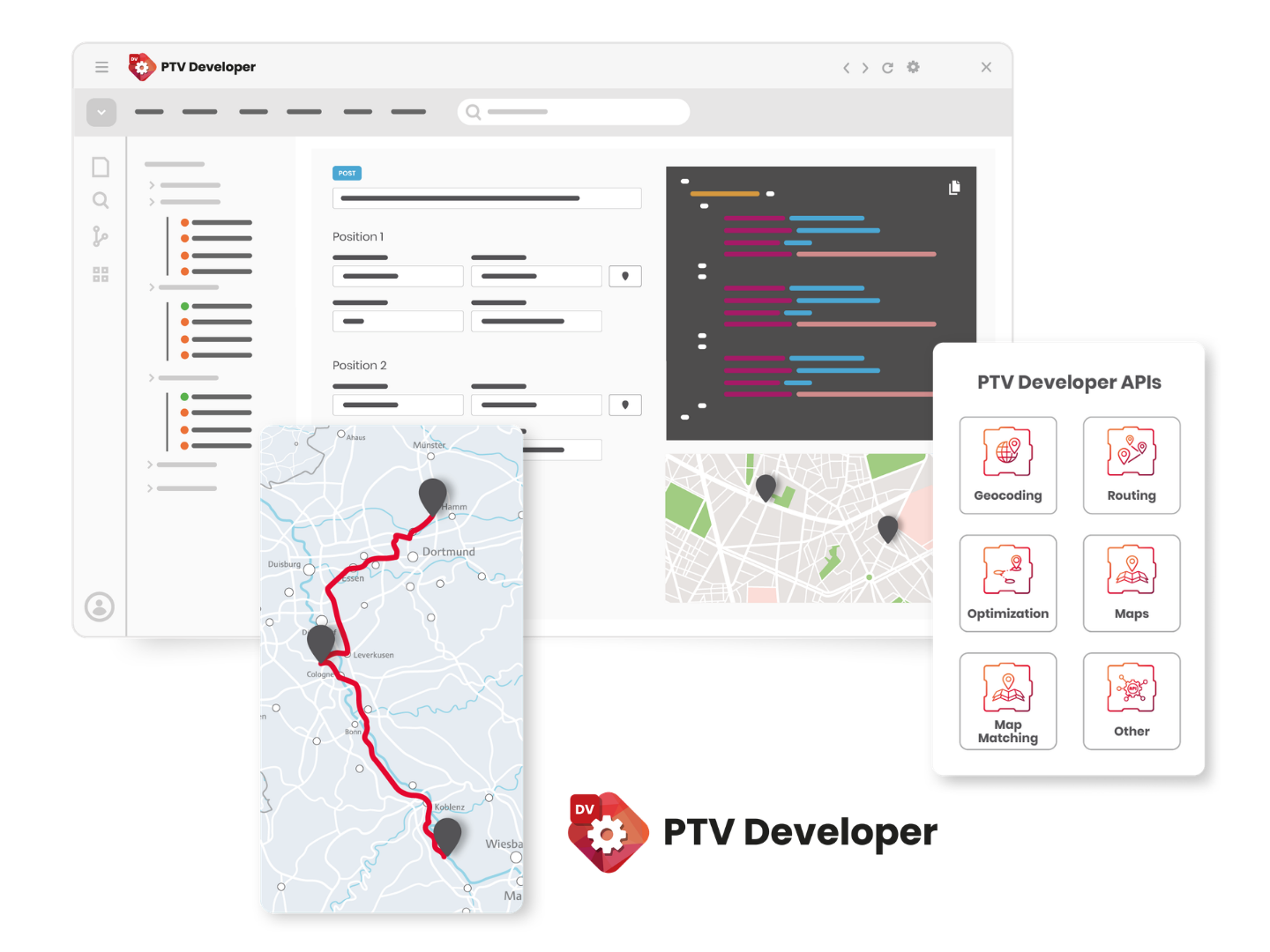
Your planning layer doesn't have to mean a tech stack overhaul. PTV Developer provides 17 developer-ready APIs — usable individually or combined — that let IT and engineering teams embed logistics planning intelligence directly into existing ERP, TMS, and WMS systems, computing accurate distance and travel-time matrices for thousands of stops in seconds.
In practice, that means heavy planning calculations run in the cloud behind a unified interface, with automated data flows replacing manual translation between systems — so integration effort stays low even as network complexity grows.
Industry relevance
While strategic transportation planning is essential for any enterprise managing a multi-depot fleet, specific operational realities define success across key logistics sectors:

Industry
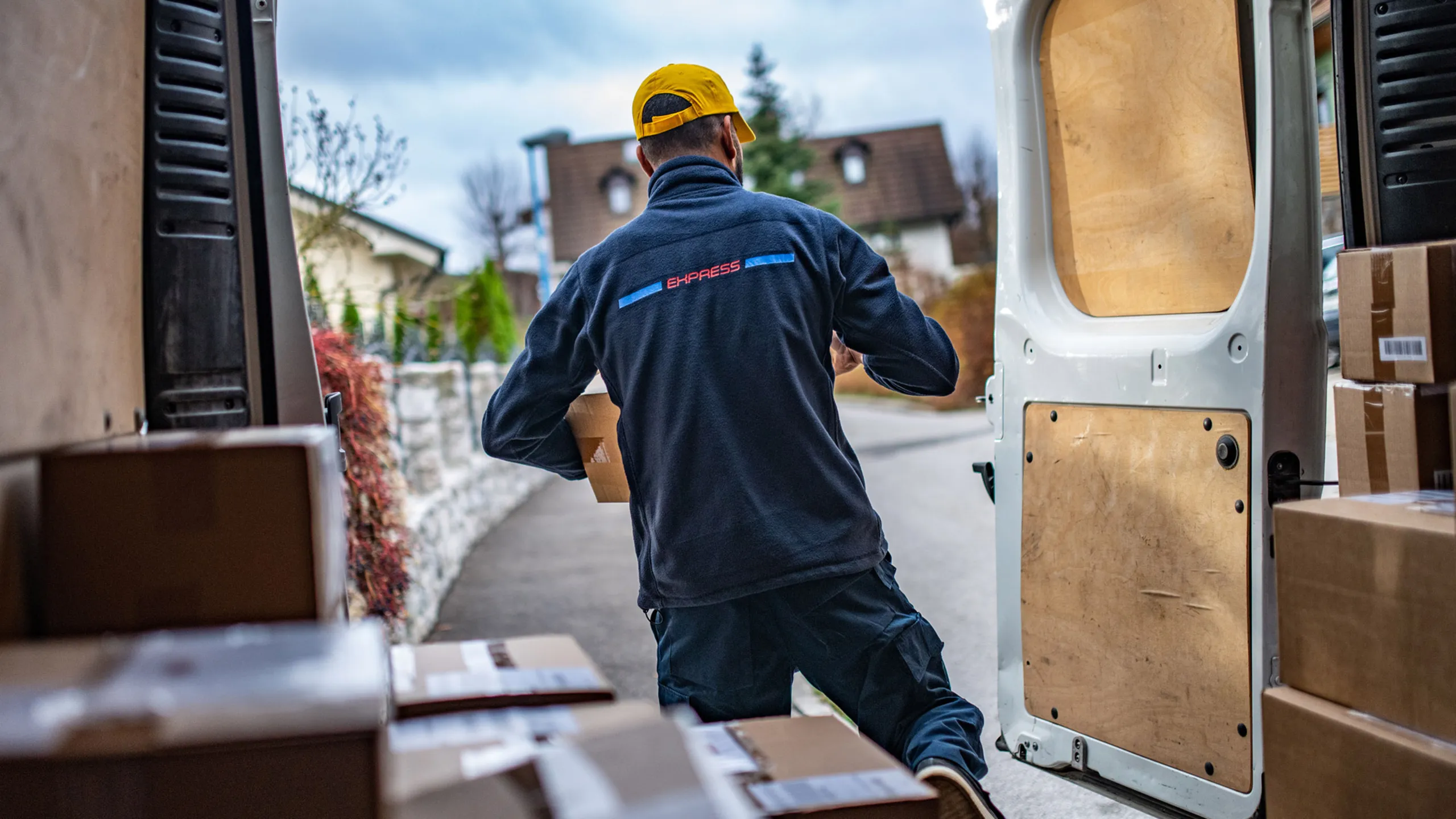
Parcel
Handle complex, high‑volume, multi‑stop deliveries with greater efficiency and lower costs.


Industry
Retail
Enhance your retail logistics with smart route optimization & delivery software that drives efficiency and growth.

Industry
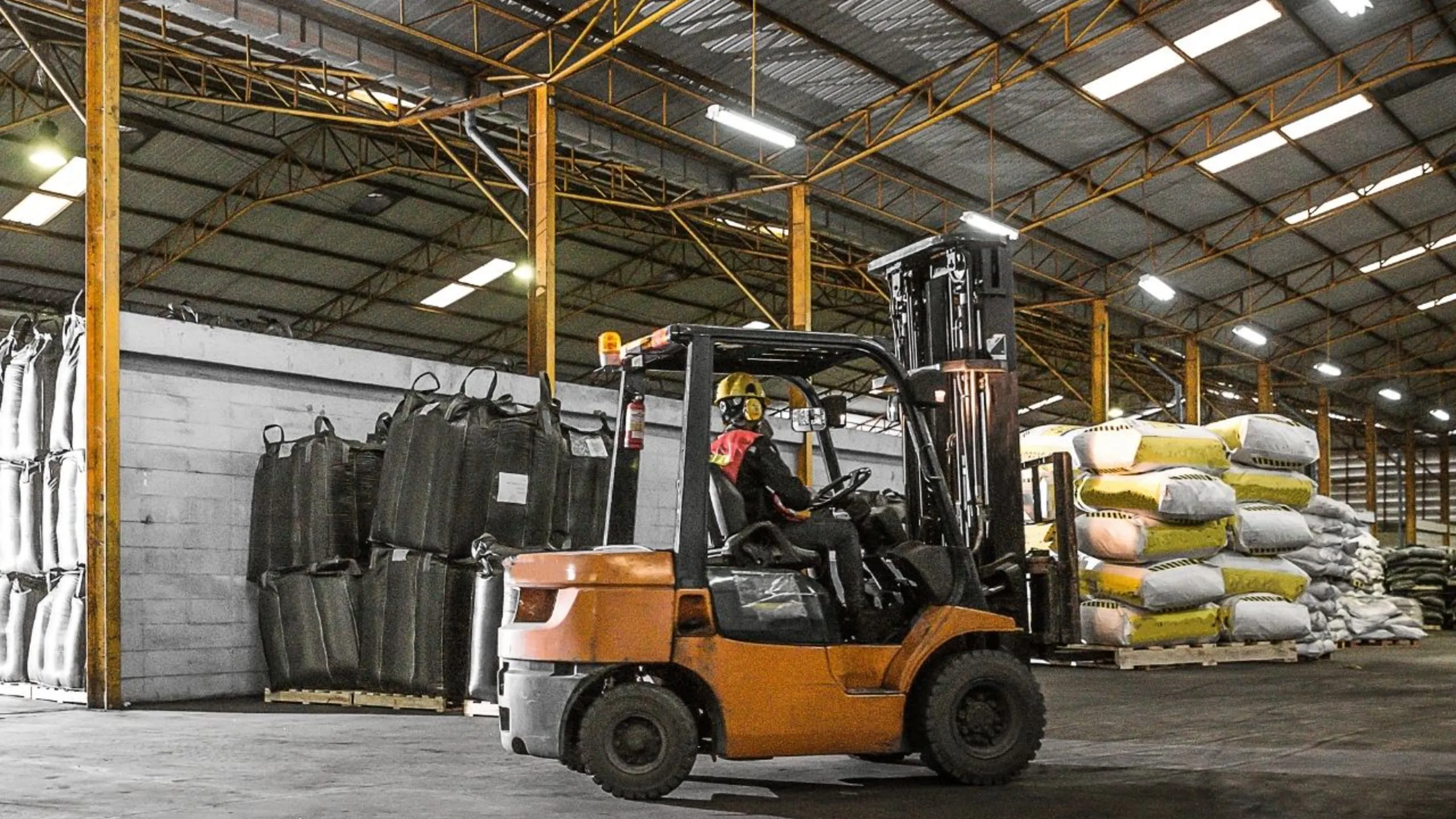
Producers & Manufacturers
Ensure reliable, on-time deliveries with smarter logistics software.
Proof of planning's potential
When enterprise logistics networks replace manual planning and unexamined network structures with continuous algorithmic solutions, the impact on operating margins, service levels, and carbon emissions is clear:
- Up to 20% Lower Total Operating Cost
- 15–20% Smaller Carbon Footprint
- Up to 80% Less Time on Manual Planning
- Up to 95% More Feasible, Accurate Plans


See what smarter planning could save your network
Try our free calculator: Enter your fleet size, stop volume, and depot count for an instant estimate of the cost reduction, mileage savings and fleet utilization gains available through optimized network and capacity planning.
FAQs about transportation planning
Toggle accordion item
What is transportation planning in logistics, and how is it different from route optimization?
Transportation planning is the strategic and tactical process of determining a logistics network's structure — depot locations, fleet sizing, resource allocation, and delivery territories — across time horizons ranging from weeks to years, before a single vehicle is dispatched. Route optimization, by contrast, is the downstream operational execution layer that calculates daily stop sequences and paths for vehicles based on the physical network designed during the planning phase.
Toggle accordion item
How do you decide how many depots a distribution network needs, and where they should be located?
Depot count and geographic placement are determined by running strategic network simulations in tools like PTV OptiFlow. The system analyzes historical order volumes, commercial road networks, transport costs, facility overheads, and customer delivery time windows to compute the locations that minimize total network cost.
Toggle accordion item
What is the difference between strategic, tactical, and operational transportation planning?
Strategic planning focuses on long-term network design, depot footprints, and capital fleet acquisition. Tactical planning focuses on balancing fleet resources, driver labor shifts, territory sectorization, and capacity allocation against forecasted demand. Operational planning focuses on executing stop sequences and dynamic re-routing for immediate dispatch. The time horizon is the main difference between the three.
Toggle accordion item
What is smart sectorization, and how does it relate to fleet network planning?
Smart sectorization is the algorithmic design of delivery territories based on stop density, road accessibility, and driver workload. It connects tactical network planning to daily operational stability by ensuring delivery zones adapt dynamically as customer order distribution evolves, eliminating overlapping routes and driver burnout.
Toggle accordion item
Can transportation planning software integrate with our existing TMS, ERP, or WMS?
Yes. Through PTV Developer, enterprise organizations can integrate planning, routing, geocoding, and distance-matrix APIs directly within their existing SAP, Oracle, or custom TMS landscapes, embedding advanced network intelligence without replacing their primary IT systems.
Toggle accordion item
How does resource allocation work across a multi-depot network?
Resource allocation across multi-depot networks must evaluate fleet capacity, driver availability, and facility throughput across all regional sites simultaneously rather than in isolation. PTV OptiFlow balances order fulfillment responsibilities across neighboring hubs to eliminate localized capacity bottlenecks and minimize total network mileage.
Your next recommended reads

Blog
How route optimization improves costs and service levels in CEP, retail, and transport & logistics
Learn how route optimization helps logistics, retail, CEP and improve reliability with AI‑powered planning.


Blog
Delivery network design: When and how to redesign your delivery network with optimization
Learn when to redesign your delivery network and how route optimization improves your network design and planning.


Blog
Questions every operations manager should ask before buying route optimization software
What is the best route optimization software? See our practical checklist.