


Assign first, route later: where multi depot plans lose money
Most teams plan in two steps. First, orders are assigned to depots using a rule such as nearest depot, postcode or fixed territory. Second, routes are optimized inside each depot. Each step looks reasonable. Together they lock in a structure before routes are ever considered.
Picture a customer assigned to depot A by territory. A route from depot B already passes that customer's door and has room on the truck. The planner at depot A cannot see this, because the decision was made upstream and each depot optimizes only what it was given.
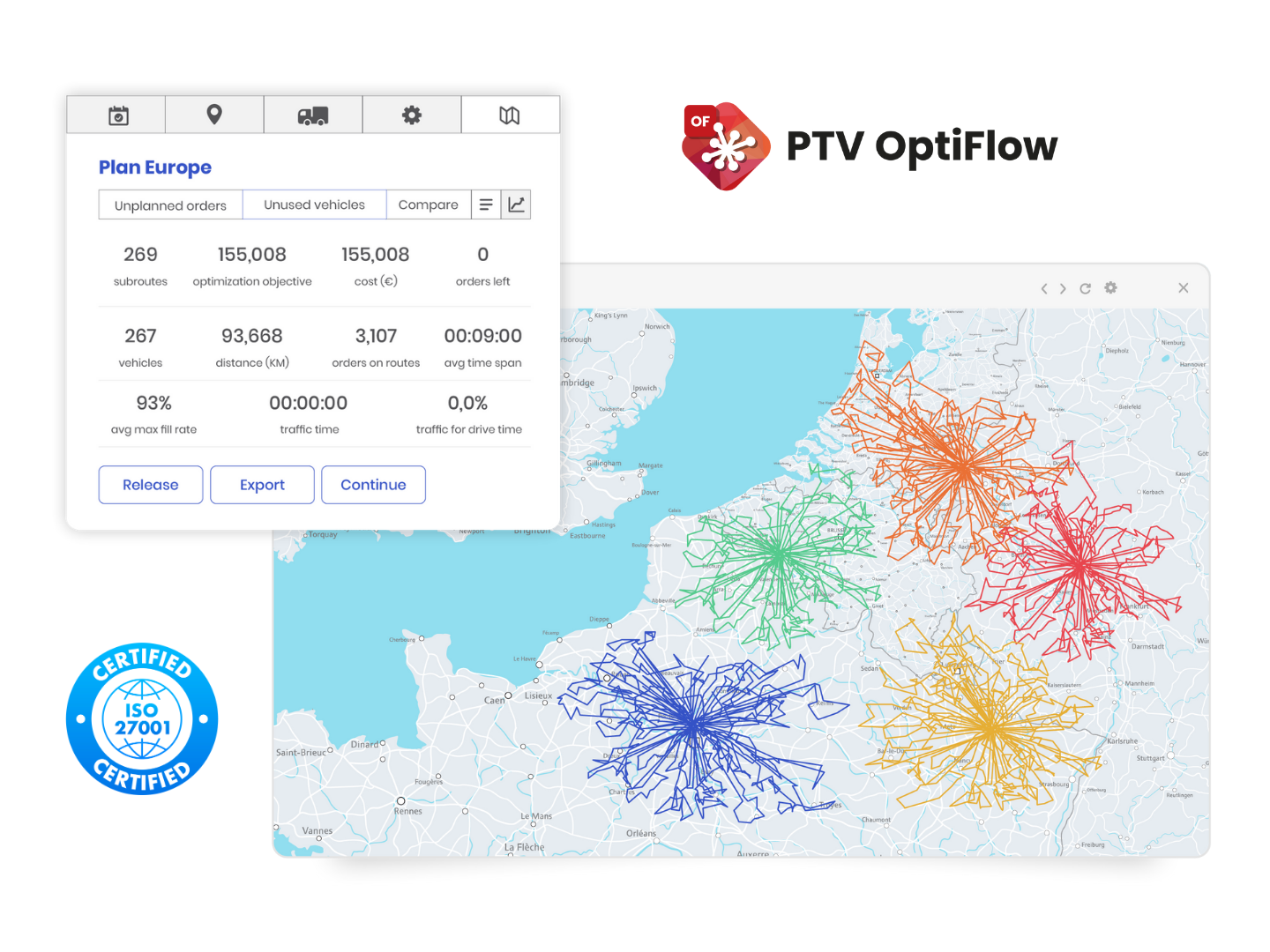
Integrated planning removes that gap. Assigning orders to depots and building routes are solved together, against vehicle capacities, delivery windows and depot capacities, in a single plan. This is how PTV OptiFlow works: it simultaneously optimizes depot assignments and delivery routes. Planners spend less time on planning and make fewer errors, drivers get shorter travel times and lower fuel use, and depots make better use of their resources.
To know more about how PTV OptiFlow assigns deliveries to depots and optimizes routes in a single step, see integrated depot and route optimization with PTV OptiFlow.