Search for content
Last-mile delivery

What is PUDO delivery? A guide to pick-up, drop-off points in last-mile logistics

A parcel that does not reach its destination on the first attempt costs money twice: once for the failed run, and again for the retry. At enterprise parcel volumes, that is not a rounding error, it is a cost line that repeats every day.

What is PUDO, exactly? 

PUDO stands for pick-up, drop-off: a designated third-party location, a parcel locker, a staffed carrier shop, or a retail counter operated by someone other than the selling merchant, where a customer collects an inbound parcel or hands off a return. It is a distinct model from a few adjacent terms that often get used interchangeably.

TermWhat it actually meansWho operates the location
PUDO / out-of-home (OOH) deliveryCollection or drop-off at a third-party carrier location: a locker, shop, or counterA carrier, or a dedicated network operator
Click and collectCollection from the selling retailer's own storeThe retailer selling the product
BOPIS (buy online, pick-up in store)Same concept, more common as a US termThe retailer selling the product


The term itself is mostly European and UK usage. In the US, the equivalent concept is usually called an access point under carrier-specific branding: UPS Access Point, FedEx Hold at Location, USPS retail partnerships, and Amazon Hub. 
 

PUDO points work the same way in reverse. A customer dropping off a return at a locker or carrier counter skips the trip to a retailer's own store and the wait for a courier pickup which is why PUDO adoption tracks closely with returns volume, not just outbound delivery volume.

Why PUDO matters for large-scale delivery operations 

Last-mile delivery is the most expensive part of the supply chain, commonly cited at around 53% of total delivery cost. PUDO addresses that cost from two directions at once: It lowers the cost of the delivery itself, and it reduces the odds of a failed attempt. 

Track and Trace

8%

Of U.S. first-attempt deliveries fail - mostly from bad address data (Loqate, 2021)

Industry Freight

40%

Of European shoppers have already used out-of-home delivery (DHL, 2025)

Courier, express and parcel delivery

~4 in 10

UK adults used a parcel locker in the past year (InPost / Retail Economics, 2025)

At the volumes a national CEP carrier or large retail network moves in a single week, even a modest percentage shift in cost per parcel compounds into a substantial absolute figure. There is a policy dimension too: urban congestion and low-emission zone rules are pushing city planners toward consolidated delivery models.

What actually makes a PUDO network hard to run

Running PUDO well, at a scale that genuinely moves the needle on cost, means solving three problems most delivery networks were not originally built to handle:

Multi stops

Network & site design

Site selection is hard - radius models understate real catchment.

EV charging optimization

Route complexity

Routes must blend single deliveries with multi-parcel PUDO drops.

Sync locations

Address & location accuracy

Address errors cause most failures - PUDO must pinpoint the right point.

Scale your PUDO network without scaling your costs

Explore proven strategies to cut delivery costs, scale your PUDO network, and streamline route optimization.

 Talk to an expert Access the guide first 

Making PUDO operationally executable

At the core, a PUDO strategy is still a routing problem - just one with a few extra constraints most planning tools don't account for.

One route plan, not two delivery models

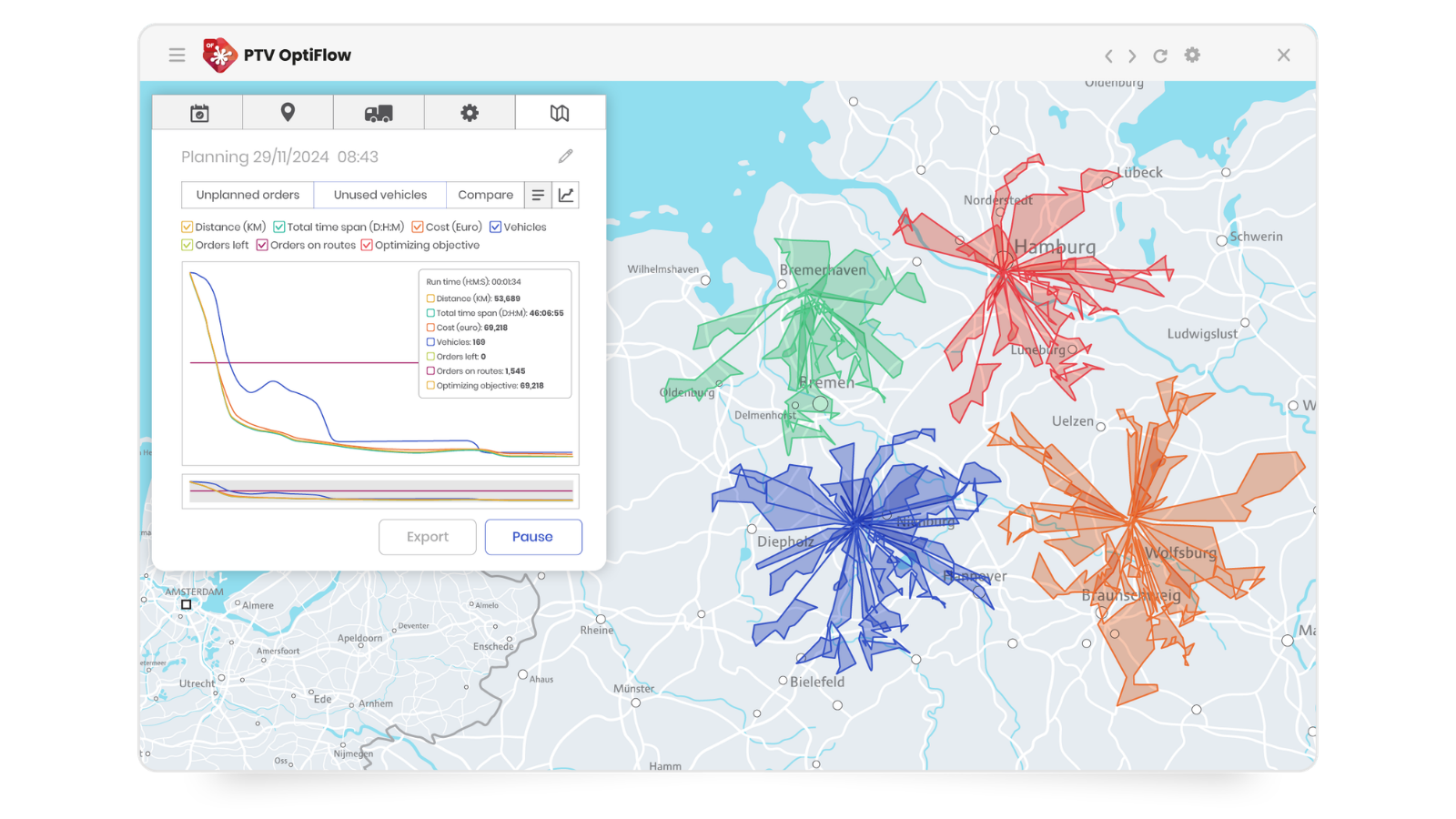
PUDO stops and home deliveries get sequenced together in a single run, alongside time windows, vehicle capacity, and driver hours, rather than through a separate planning process. Two things make the consolidated stops themselves realistic to plan: every parcel bound for the same pickup point can be treated as one aggregated stop rather than the system adding up each parcel's handling time individually, and a pickup point's real capacity — how many drops it can actually take within a given hour can be set as a hard limit, so the plan never routes more vehicles to a locker bank or carrier counter than it can physically process.This is what PTV OptiFlow does, on its own, as part of the same plan as everything else on the route.
See how PTV OptiFlow integrates deliveries and pickups on the same route for more on this specific capability.

Finding the right point in real time, not just the nearest one on a map

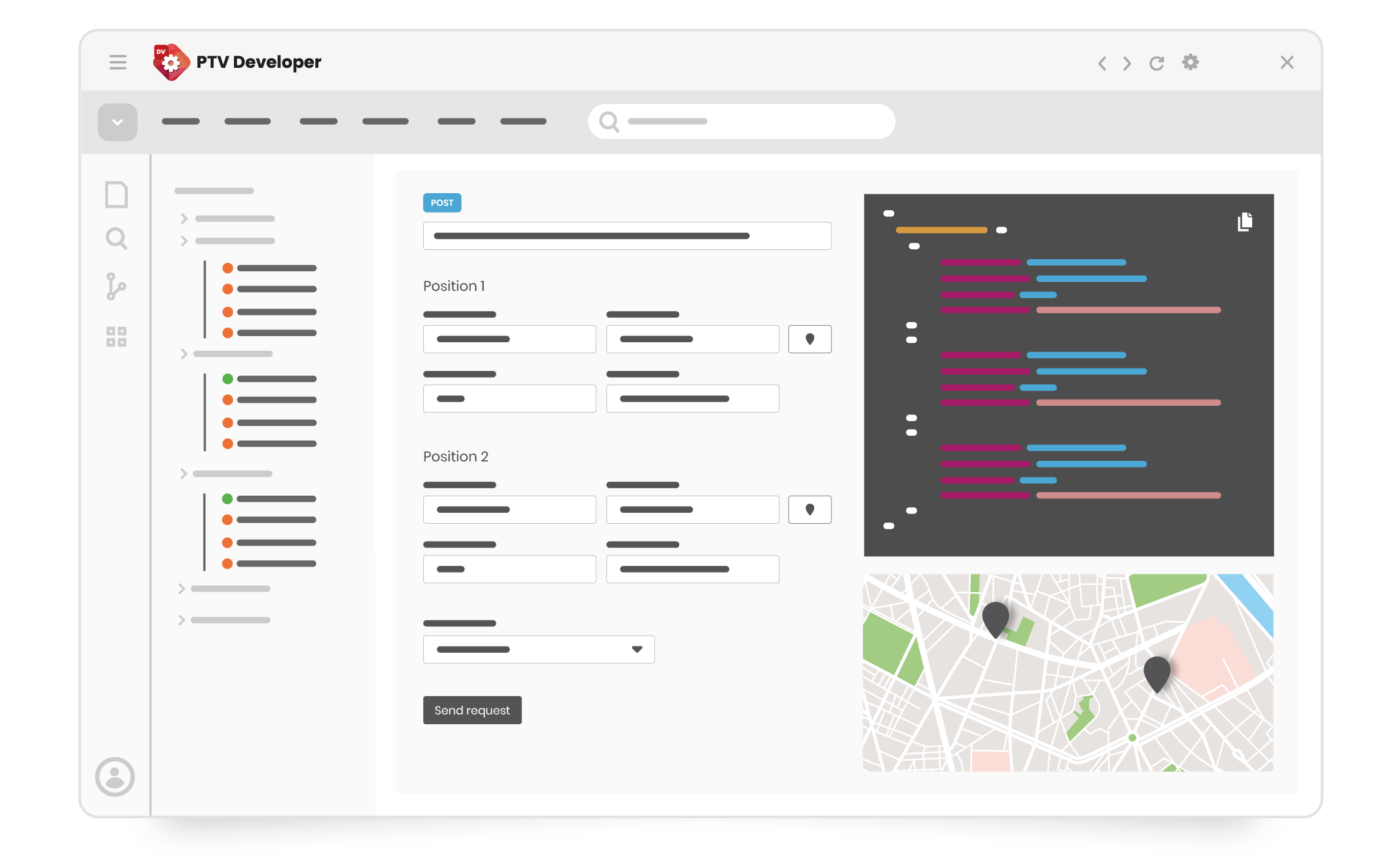
The same logic is available as an API: For a company building its own transport management software rather than adopting a ready-made tool, tasks bound for the same pickup point can be required to schedule as one stop, and a location's own throughput: how many trucks or packages it can actually process at once - can be set as a hard limit on the plan. This is what PTV Developer's Route Optimization API V2 does, for teams building PUDO logic into their own systems.

Benefits of integrating PTV Logistics technology

Cost control

10–30% transport cost reduction

Strategy

60–80% less planning time

CO2 reduction

5–20% CO2 reduction

Proven across parcel, retail, and logistics networks

Not sure where to start?

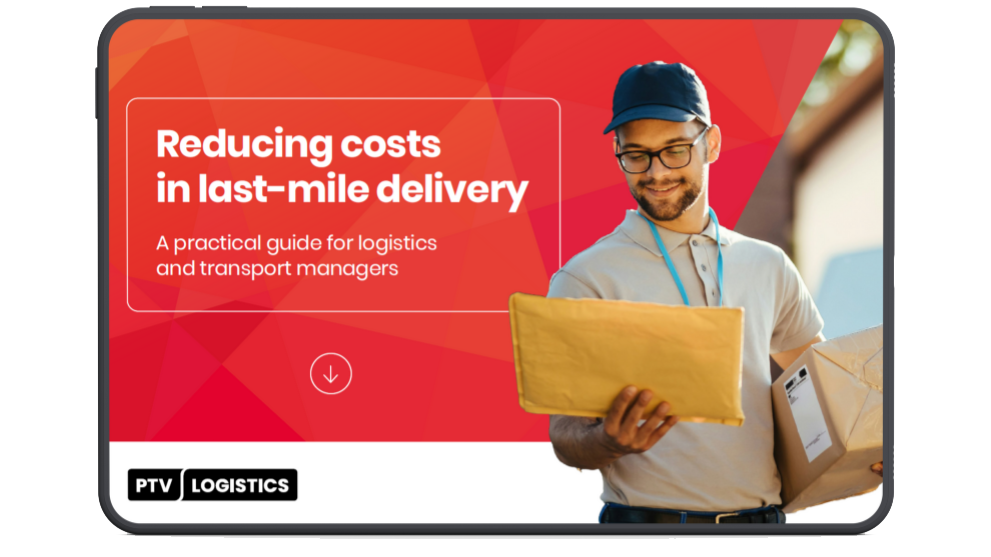
PUDO is one lever in a much larger last-mile cost equation. If what you read above resonated, our expertly-curated whitepaper, “Reducing costs in last-mile delivery”, goes further into the full picture:  

  • Why last-mile delivery is expensive: key cost drivers 

  • 3 focus areas to reduce last-mile costs 

  • Quick wins to lower expenses 

  • Essential last-mile tech stack 

Access your guide  Talk to an expert

PUDO across your industry

Frequently asked questions

Toggle accordion item
What does PUDO stand for?

Pick-up, drop-off: a delivery model where a customer collects or returns a parcel at a third-party location, a locker, carrier shop, or retail counter, instead of a home address. 

Toggle accordion item
Is PUDO the same as click and collect?

No. Click and collect means picking up from the selling retailer's own store. PUDO means picking up from a third-party carrier or network location, typically not affiliated with the retailer that sold the item. 

Toggle accordion item
Is PUDO used in the United States?

The concept is used, but the term usually is not. US carriers brand it as an access point instead. UPS Access Point, FedEx Hold at Location, and Amazon Hub are the most common versions.

Toggle accordion item
How much does it cost to build a PUDO network?

It depends heavily on infrastructure type, since a locker bank costs more to install than a retail-partner counter, and on site count. Realistic cost planning depends more on existing network density and target catchment areas than on any single industry average. 

Toggle accordion item
Does PUDO actually reduce failed deliveries?

Yes, substantially, since it removes the most common failure mode: nobody home to receive the parcel. Address inaccuracy remains the leading root cause of failed delivery generally, which is why reliable PUDO point lookup still depends on accurate geocoding. 

Toggle accordion item
Does PUDO reduce delivery emissions?

Generally yes. Consolidating several nearby deliveries into a single PUDO stop cuts the vehicle kilometers driven per parcel. How much it cuts depends on what is being measured, and a single consolidated stop and a full microhub network with electric last mile vehicles are very different setups. Be careful with any headline percentage you come across, and check what it covers before you rely on it.

Toggle accordion item
Can PUDO be used for returns, not just deliveries?

Yes — most PUDO networks handle drop-offs as well as pickups, and returns are one of the main reasons carriers and retailers invest in them. A customer returning an item at a locker or carrier counter avoids a home collection booking or a trip to the original retailer's store.

Toggle accordion item
How does route optimization software handle PUDO deliveries?

It plans PUDO stops and home deliveries on the same route rather than as two separate planning processes — sequencing consolidated drop-offs alongside individual deliveries within the same time windows, vehicle capacity, and driver-hour constraints. This is what PTV OptiFlow does.

More from our library